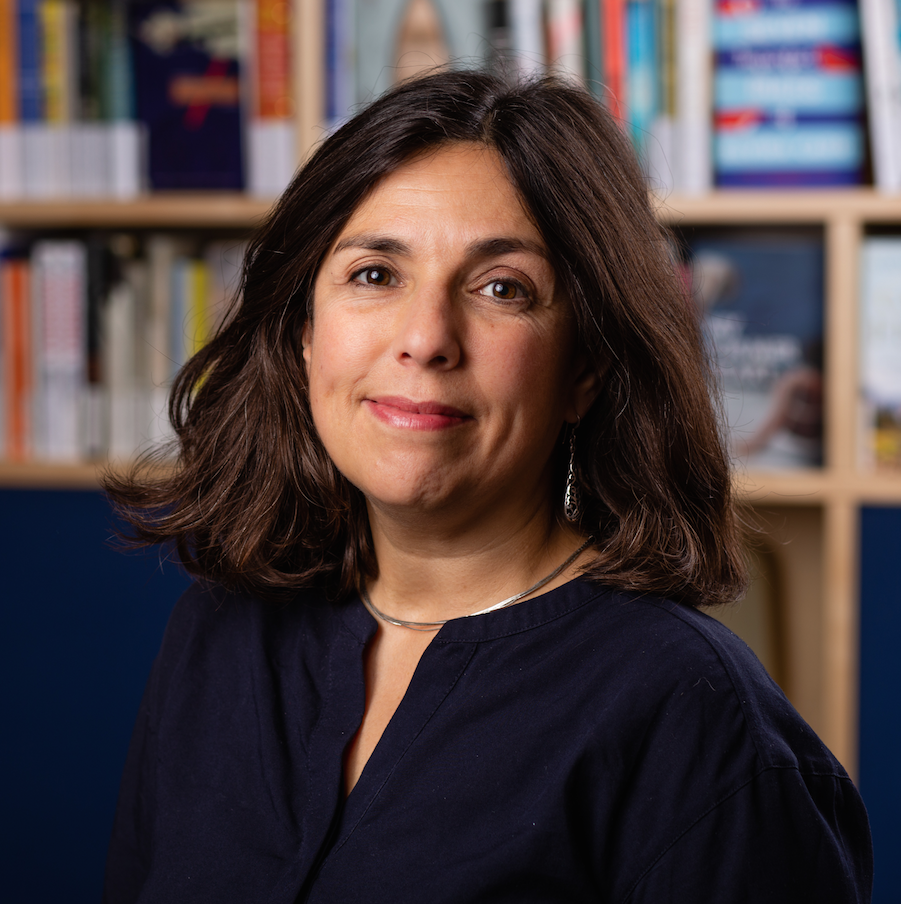
The state of care

Over the last few months, I’ve worked with the Centre for the Modern Family, a relatively new but influential think-tank, and its expert panel, authoring a report on the state of care in the UK. It was an interesting but very disturbing report to write. It was very clear that those supporting disabled people, who were already experiencing some cuts to benefits, were struggling to make ends meet. The same was true of those caring for older people. 

What was also sobering was that both groups – as well as sandwich carers – felt forgotten by society at large. They felt largely failed by Government (perhaps a little less so by local Government). And they felt that the unspoken contract that we as a nation signed, post-war, to support our vulnerable citizens, at times of need (and we can all be vulnerable at times) was being whittled away in this time of recession. 

Read the report, therefore, and weep, for the shades of Bevan, Beveridge and Atlee, who in their own ways created the modern welfare state. As our nation ages, and as our economy worsens, the contract they undertook – to support those in need – seems to be under question, as never before. 

You can read the report here: 

http://www.centreformodernfamily.com/TheResearch/FamiliesthatCareMay2013.aspx


Everest, Sherpas, Chris Bonington and Spangles wrappers

In 1975 my dad’s brother, Andrew Quarmby, then an aid worker in Nepal, invited us to join him on a trip to the Himalayas. My mum and dad trained us hard, despite the lamentable lack of hills in Norfolk; the one small slope near our home became our ‘Everest’ and we walked up and down it twenty or thirty times during our fitness sessions to build stamina, rewarded with chocolate chip cookies if we didn’t moan. We saved furiously for the trip; it was the trek of the lifetime. I was only eight and my brothers were ten, eleven and twelve. At the beginning of the summer holidays we flew in Kathmandu and met Uncle Andrew and family  and their great friends, Sherpas Nema and Pemba, who organised our trip for us. 

Before long we were trekking twenty miles a day, in monsoon season. Leeches attacked us; our Sherpa companions would light cigarettes and touch the tip to the fat, blood-bloated leech, which would drop off. I and my brothers and cousin would take great delight in stamping on the leeches until they burst and the blood spattered everywhere! My mother was horrified at our blood-thirstiness; she let the leeches feed on her and just drop off when they were done; I think she may have been a Buddhist in another life.

The aim was for Uncle Andrew and my dad, both great walkers, to reach base camp. Every day we ate watery porridge, endless packets of Beanfeast which we had brought with us and sometimes the Sherpas would kill a scrawny chicken along the way. (I shall never forget the sight of a headless chicken, still running around in the dusty road, after its head had been sliced off with a sharp knife.)

We learned to respect the Buddhist gompas we visited on the way, passing them on their left, as ritual dictated, and got used to seeing prayer flags flutter in the air. Sometimes the Sherpas, who carried much of our baggage, would carry me and my younger cousin, Sarah, across fast-flowing rivers. They were kindly to us; taught us how to play games with stones and how to count up to 14 in Nepalese. I still can; I learned, to my surprise, when I was interviewing some Romani families up at Appleby Horse fair last year, that Romani numerals are almost exactly the same in pronunciation. 

We were walking in the trail of Chris Bonington, the great British climber who was attempting to scale the south-west face of Everest that same year. His team were, of course, far better equipped than our family one. They had cheese, unlike us (my starving middle brother would hang around their camp sometimes until someone would take pity and feed him) – and Spangles. The wrappers ended up on the trail. We would follow on, in his wake, and my mouth would water, as I remembered the fizzy taste of Spangles, and how much I loved them, as I saw the wrappers stretching out in front of us. But the wrappers were always empty.

His team were better paid too and had lighter loads too. One day our Sherpa team (to the great embarrassment of Nema and Pemba) went on strike and demanded the same wages as the Bonington team. Perhaps they fancied the Spangles as well; I couldn’t blame them!

Eventually it was resolved and we made it to the beautiful villages not far from base camp, Kunde and Kumjung. For the children and mothers, that was the end of our trip. I and cousin Sarah made friends with the kids at the local hospital, and we collected treasures we found lying around – old bits of medical film, bandages, old scraps of anything we could play with. We played for hours in the thin, clean mountain air. Only one thing bothered me – having to drink Nepalese tea, flavoured with ghee. I never got used to it, legendary as it is for its health-giving qualities.

My father and Andrew trekked on with a few Sherpa companions. They got within sight of base camp, but then Andrew felt his recurrent malaria coming back. With no access to drugs in such an isolated place and at that high altitude, they had to turn back. Neither of them ever made it back to Everest. Years later Andrew, by then campaigning to raise awareness of Aids in southern Africa and of the need for land redistribution, died in a suspicious car accident in Namibia. 

We returned to Kathmandu and took a tearful farewell from our friends, our Sherpa guides and friends. Hearing about the altercation at Everest reminded me of our own time in the shadow of the great mountain, in happier times when few Westerners were privileged to visit the Himalayas. Perhaps, in these days of so many organised expeditions, with so much money to be made on both sides, something real in the human relationship between the local people and the Westerners who come to visit has been lost. 


Why the RSPCA should stop its private prosecutions

In 2005 I started to investigate the RSPCA’s prosecution record – below for BBC Newsnight. I am posting here the (fully legalled) script I wrote at the time as a (freelance) reporter, just before the Animal Welfare Act became law. I wondered whether it was worth reviving this, seven years after transmission, but as I re-read the script, I realised that many of the concerns raised then are still legitimate today. For me, as a journalist, who has written a lot on the criminal justice system, I have my own concerns about a charity becoming a de facto enforcer of the law. It makes me uncomfortable – particularly when some of those prosecuted by the RSPCA are vulnerable people – children, disabled and older people, who might well might not be prosecuted if the CPS was involved. Justice should be tempered with mercy. Justice, at its best, is a balancing act. I think the RSPCA has lost its own sense of balance, because it is at the one time, a campaigner against animal cruelty, an investigator and a prosecutor. To safeguard its own reputation, and the good work it does to promote animal welfare in many ways, it should stop doing private prosecutions. Then, like the Royal Society for the Protection of Birds, it might well regain many of the members it has lost.

The RSPCA states that most of its critics are pro-hunting. For the record, I have never hunted. I am not pro-hunting. I just happen to believe that both humans and animals are worthy of compassion.

Lastly, when I made the Newsnight film, I was told by BBC Security and others that I could be targeted by animal rights extremists who would be angered that I had criticised the RSPCA. I don’t blame the RSPCA for that, but I do think that it should be possible for journalists and others to criticise large and powerful institutions without fearing that they, or their children might be harmed as a result. 

Newsnight RSPCA film
Transmitted October 2005
Reporter Katharine Quarmby

KQ: “They call people like RSPCA Inspector Simon Osborne the animal police. Osborne’s beat cover’s North London and the city and he visits around ten animal owners each day, investigating complaints of animal cruelty. He joined the force eight years ago.”

Inspector Osborne interview: “I wanted to make a difference to animals. I wanted to alleviate the suffering I had seen and I’ve enjoyed it and I’ve had some successful prosecutions. I know I’m doing a worthwhile job for a good cause.”

SEQUENCE WITH INSPECTOR ON HIS ROUNDS..

KQ: “Inspector Osborne had received a complaint that a dog was shut out on a balcony for hours on end. The owner isn’t answering the door and Osborne can’t get in to check whether the dog is suffering. It’s a common problem.”

Piece to Camera from animal sanctuary: “RSPCA animal sanctuaries like this one near Guildford care for around 70,000 animals a year. Some of those will have been abandoned – others the victim of cruelty. This work has helped to make the RSPCA Britain’s best loved animal charity. But another aspect of the organisation is far more controversial.”

Simon Waldron sequence and voiceover by KQ: “Simon Waldron is Treasurer of Isleham Animal Sanctuary near Cambridge. It was raided by the RSPCA three years ago.”

Waldron interview: “We received a phone call, saying a large number of people had arrived at the sanctuary, police officers and RSPCA officers. It was a couple of hours before we found they wanted to take our animals way and that was when the panic set in.”

KQ voiceover over sanctuary pix. “The police, on behalf of the RSPCA, removed four animals. Waldron maintains they were in good condition.

Waldron: “It felt horrific, they were animals we loved and cared for, and they were being taken away unjustly.”

KQ: “The animal sanctuary was advised by their solicitors that their animals were being kept illegally. They sued the police who had removed the animals on behalf of the RSPCA. Three returned. One died whilst in the care of the charity. The RSPCA later dropped all charges, but the action had taken its toll on the rescue centre.”

Waldron: “It put severe financial pressure on me, as I was self-employed, on me and my family. When you are doing just that for two years your life is put on hold, all the money we had raised to try and make things better for the animals was having to be spent on legal fees so the animals were suffering. It was total mayhem for two years.”

PTC KQ: “The RSPCA carries out around 1000 private prosecutions a year – the charity is one of Britain’s most prolific prosecuting bodies, but should a charity, campaign, investigate and prosecute on the same issue?”

DAVID BOWLES INTERVIEW (RSPCA OFFICER) “There could be a conflict of interest and we have to be very careful and that’s why we separate out those three powers within the RSPCA. It is possible to do those three things if there are very clear lines of demarcation.”

Royal Society for the Protection of Birds raid pictures, followed by Scottish Society for the Prevention of Cruelty to Animal raid pictures. KQ voiceover:
“The RSPB ceased carrying out private prosecutions in 1992. The charity had concerns about the separation of powers. The RSPCA’s sister organisations, the Scottish Society for the Prevention of Cruelty to Animals, prosecutes animal cruelty cases through the Procurator Fiscal’s Office, the Scottish equivalent of the Crown Prosecution Service.

Mike Flynn, Senior Inspector, SSPCA Interview: “We have no influence over what the Fiscal decides. If we have the correct evidence and there is a breach in the law the Fiscal will take it to court. If they think that things haven’t been done properly and for whatever reason it’s being used as a campaign tool, then there will be no proceedings. For me if I was going to be accused I would rather be accused in Scotland than in England.”

Sequence with Chris Newman, a Gov advisor on animal welfare: KQ voiceover: “Newsnight has learnt of a number of cases where the RSPCA may have charged or prosecuted animal keepers for animal cruelty without having a strong case. Chris Newman advises the Government on animal welfare. He has reviewed thirty cases where the RSPCA prosecuted people caring for exotic animals.

Newman interview: “I can say that in thirty cases I have looked at in only two there have been issues about animal suffering and in both cases they were not mentally cognizant of what they were doing. If cases were independently reviewed I would suspect that 80% of the RSPCA prosecutions would not proceed because there is insufficient evidence of a crime having been committed or no evidence of a crime having been committed.”

STEPHEN HEADING (FARMER) SEQUENCE “The RSPCA rounded up my sheep here, penned them up here, just in this little area. They couldn’t find transport take them away, they left them penned over a hot weekend with little food and water.”

KQ voiceover: “Stephen Heading is an award-winning sheep farmer from Cambridgeshire. A year ago he was prosecuted by the RSPCA for cruelty to sheep. He was devastated by the accusation.”

Heading interview: “I hadn’t done anything wrong. I had to fight my cause. If it broke me in the end I had to do it.”

KQ “I t was going to cost him £40,000 to fight the case. He mortgaged his house. The pressure built.”

Heading: “I would wake in the middle of the night after a couple of hours sleep. As soon as I woke up the whole case was in my head, on my mind all the time so I got no sleep. So some days I was in a hell of a state.”

James Pavey interview (his lawyer): “The RSPCA did a number of things that were unsatisfactory. They knew his contact details but didn’t contact him. They seized his sheep without taking samples to prove what state they were in. They shot one of the sheep without a vet present. They took them away and wouldn’t allow Mr Heading to know where to.”

GRAPHIC PLUS VOICEOVER: “District Judge Parkinson was damning in his criticism of the RSPCA. He said: “Inspectors are not fully trained. I think the RSPCA needs to look very carefully at its investigations and conduct. The Inspector had little thought about his duties under the Police and Criminal Evidence Act.” The Judge went on to say “If the RSPCA are going to prosecute they need to abide by the rules. The whole matter was unfortunate and flawed.”

David Bowles (RSPCA) response: “There are lessons to be learnt and we learnt those lessons from that case. We investigate over 100,000 cases. It’s not a surprise when sometimes you get it wrong. We are quite happy to put our hands up when we do. There are things that we could have learnt and the case was important because we learnt something from it and we did improve our procedures as a result of it.”

KQ voiceover: “The RSPCA says it follows the Police and Criminal Evidence Act but it does not routinely tape record interviews with defendants as police officers do. And there is widespread confusion about their powers.”

Simon Waldron: “It was very difficult to distinguish between the RSPCA and the police, difficult to know who had the power. They were all imposing figures in uniform, you give them all respect, the police were there to do their job and to keep the peace and we were not told they were legally responsible for seizing the animals.”

James Pavey: “The RSPCA will turn up and they look like officers in uniform, they have the paraphernalia of the police, the uniforms, the notebook. I’ve never had a client who had had it explained by the RSPCA officer that he or she has no statutory powers.”

BBC Six News and KQ voiceover: “Rosalind Gregson was jailed in June for three months after an RSPCA prosecution. The defence argued that Gregson’s hoarding of animals started after the death of her son from a drug’s overdose, a defence used regularly in the US and linked to obsessive compulsive disorders.”

David Bowles interview: “It’s difficult to say why people hoard. People have different reasons and I wouldn’t want to go into the mental health of the defendant. The information we were given was that she did not have a mental health condition. It was important because we didn’t’ want to undertake similar hoarding in the future. She had extenuating personal circumstancies and she couldn’t cope. It was basically a cry for help.”

KQ Question: “But couldn’t you have referred her to social services for a psychiatric assessment?”

Bowles: “In that case the prosecution department decided it was in the public interest to prosecute her because we were afraid things could get out of hand again.”

Mike Flynn, Scottish Society for Prevention of Cruelty to Animals: “There are times when we have dealt with people with obvious mental health difficulties but a lot of people with mental health difficulties do not present as such. The Fiscal will be able to find that out and if they think it is a mental health issue then they will be loath to take it to court.”

KQ voiceover, over pictures of Rosaline Gregson, and comments, on the Internet: “Now photographs of Rosaline Gregson, irrespective of her mental health, are posted on the Internet for all to see.”

KQ Piece to Camera with animal rights websites on computer behind: “We spoke to several people who had been charged by the RSPCA with animal cruelty offences. Although they had been cleared they were too frightened of the publicity to give an interview for the programme. Small wonder when those merely accused of animal cruelty end up on websites like this one.”

David Bowles, RSPCA: “I don’t think there is any room for harassment or breaking the law and we would try and stop that.”

Chris Newman pictures, KQ VO: “Even those who merely voice concerns about RSPCA prosecutions can face a backlash from animal rights activists.”

Chris Newman interview: “I have suffered quite a lot of persecution. I have had six interviews over the last two years in which my animals at home have either been killed or released, we have had our tyres slashed, our windows slashed, since I have been critical of what’s going on.”

Westminster PTC KQ “In the biggest shake-up of animal rights legislation since 1911 a new animal welfare bill has just been published. The bill will create a new duty of care offence, meaning that anyone who owns an animal will be legally obliged to ensure its welfare even if the animal is not currently suffering. The RSPCA estimates that prosecutions could increase by as much as 10% in the first year after it becomes law.”

Voiceover: “The minister confirmed that the RSPCA will carry out most of the new prosecutions, even though many groups – even the Association of Chief Police Officers, have concerns.”

Richard Brunstom, ACPO lead: “If our society chooses to use a charity to enforce the criminal law on welfare cases it has to be accepted that they are not part of the public service and in some cases are less accountable…I think it’s an interesting constitutional situation…clearly it’s an effective way of doing it for the public purse cos the RSPCA is funded as a charity through donations but it’s anomalous.”

KQ end thought (not verbatim): No doubts that animal cruelty exists in Britain – but should those who are so passionate about ending animal cruelty also be responsible for prosecuting those who they consider responsible?

 ENDS

 POSTSCRIPT: The RSPCA wrote a letter of complaint to BBC Newsnight. The film was investigated and found to be fair and accurate. The RSPCA did not pursue the matter. 


Rosie gets the plot – or how to change words into puppet magic

It must be well over a year since I first sent a draft of my story for primary school children, Rosie gets the Plot, to my agent, for some feedback about this story about sibling rivalry – and how the parents use gardening to get their older child, Rosie, to accept the new arrival, baby Robin. Cue a growing season full of challenges (for both her garden and the baby) and a wonderful harvest. 

It hasn’t made it to a picture book yet, but it has been transformed into a lovely pilot show on gardening and eating healthily for schools – which starts a mini tour in North London next week. Thanks to the brilliant Slavka from Little Angel Theatre, who spent months devising the show and fundraising,  and Tam Tam Theatre, who have developed the idea, it will now go around schools, communicating the great fun that children can have gardening. It’s not a very serious show, but we worked hard to make her gardening believable – like many kids in central London, Rosie only has a balcony on which to grow her firstImage few plants – and she encounters all sorts of problems on the way. A crawling Robin doesn’t exactly help, and nor does a bird and other pests – all part of the joy of gardening. 

Tam Tam Theatre, with its lovely crew (Marleen, the director, Laura and Thierry, the actors/puppeteers, Katherine the puppet maker and Karen, the student puppeteer) transformed my words into puppet magic. The children (at Vittoria Primary School) seemed to love the run-through and were clearly delighted to eat Rosie’s carrots at the end and stroke the baby’s head. And hopefully they know a tiny bit more about gardening now (each show is backed up with workshops on eating and growing in season and food miles). 

Let’s just hope we can get some more funding to send this round more schools – after some years of campaigning for better food in schools (as a journalist) it’s great to come back and build on all the work so many activists have done on food, and help promote the next important thing – teaching children to grow (and then eat) good food.

As we say at the end of the show: “We’ve grown our veg/Upon our plot/Now it’s time/To eat the lot!”


On Leveson and disability (Channel 4 News blog)

Lord Justice Leveson took evidence from 184 oral witnesses on just one module alone – the relationship between the press and the public. He took further oral evidence from many more people and organisations for three separate modules – the press and the police, the press and politicians and the future of the press.

But despite much campaigning, one group which is clearly victimised by some sections of the press – disabled people – did not get the chance to give oral evidence.

Submissions on disability from members of the public to the inquiry outnumbered those from any other equality strand, such as transgender, migrants and refugees, (except that of women). Four women’s groups, one transgender group and one refugee group gave oral evidence, but disabled people were barred from doing so. This was despite the fact that unlike any other group (except, perhaps, gypsies and travellers), they have been the target since the coalition came to power of what I would term an orchestrated witch-hunt by certain sectors of the media.

Leveson could have exposed a very modern witch-hunt: politicians, happy to demonise vulnerable British citizens for political advantage. And their aides who whisper dangerous misleading statistics to favoured journalists.
Two newspapers – The Sun and the Express – even run popular campaigns against “scrounging”, in which they encourage the public to denounce people they judge to be disability benefit fraudsters. This has had an effect on disabled people in Britain – one such, Peter Greener, who has MS, was harassed for three months by his neighbour, who called him a scrounger because he can sometimes walk. He considered committing suicide, such was his despair. He’s not an isolated case either – disabled people regularly speak of their everyday experiences, of being harassed as ‘skivers’, “scroungers” and “fakers” on the street if they dare to be out and about.

Read more on the Leveson inquiry: the key questions answered

This is not surprising: the media campaign against them has been hugely successful. Focus group research by Glasgow Media Group confirms that the general public believes that 50 to 70 per cent of those on disability benefits are fraudulent (they also found that there has been a tripling in the use of words such as “scrounger” in the last five years in media reports).

Those false statistics (the real figure for disability benefit fraud, from the government itself, demonstrates that is under 1 per cent) are peddled, it appears, by some in government. Leveson could have exposed the triangulation of a very modern witch-hunt: politicians, happy to demonise vulnerable British citizens for political advantage. And their aides who whisper misleading and dangerous statistics to the third group – favoured journalists.

But instead he displayed the nervousness around disability that so characterises the elite – he didn’t understand the politics of it so instead he just glossed over the problem, eventually accepting written evidence on media reporting of disability from a few chosen organisations and individuals.

I’m glad that our evidence was finally accepted, but Leveson missed an opportunity in oral hearings to expose the nexus of power that can be used, with devastating effect, to demonise one group. This would have benefited other groups as well and enabled targeted groups, rather than individuals to hold government and the press to account.

So while I’m delighted with the forensic approach taken to skewer both politicians and journalists involved in the dark arts of media management and victimisation of individuals and applaud Leveson for it, I would have liked him to go further.

Now, sadly, it’s too late.

On copyright, copyfleft and Creative Commons

I was contacted by Occupied Times (the newspaper of the Occupy Movement) for a piece about my book, Scapegoat: why we are failing disabled people, and the campaigning I have done with disability organisations to raise our concerns about the way in which both the Government and the media discuss disability benefit cuts. All well and good – I was happy to write them a free article, as this is a subject close to my heart. I sent it off, with the usual sign-off that it was under copyright to me – particularly important if I wasn’t getting paid and might want to re-use in the future.

The editorial team loved the article, but there was a catch – they wanted it published under a Creative Commons licence. They said that to publish copyrighted work was against their principles – they only accept work that is ‘copyleft’. They added that the OT did not offer payment, but nor did it seek to acquire copyright, and it would respect the author’s moral rights of ‘integrity’ and ‘paternity’.

There’s a historical irony here. Occupy’s most famous London camp was near St Paul’s Churchyard, the birthplace of what we would probably call campaigning journalism today. In the late 18th Century, publishers, authors and booksellers clustered around the very area where the camp was. Ironically, then, radical publishers paid their pamphleteers and authors. Mary Wollstonecraft, for example, was funded almost exclusively by her radical publisher, Joseph Johnson. He believed in paying radical writers so they could keep writing. We have gone backwards since then.

Having seen so many of my friends, musicians and photographers, struggle as their work has been pirated and stolen over the internet and having read about the widespread fight amongst authors to protect copyright, I said I wasn’t happy with this. I read about the six different ‘licences’ for Creative Commons on the internet, and this emerging ‘copyleft principle’, and decided to pull the article from publication. As far as I am concerned, copyright protects journalists, authors and so on from people stealing hard-won ideas and work. I don’t see anything unprincipled in being paid for my work, or protecting it so I can be paid for it in the future. After all, I’ve written and campaigned on disability hate crime for five years on a low wage. Am I over-reacting, or is Creative Commons a licence, really, to publish other people’s work in a form where it can then be, and often is, stolen by unscrupulous plaigirists? I prefer copyright – it’s straightforward and assigns ownership to the right person – the author. Creative Commons is complex, murky and open to abuse, in my view.

Comments please – really interested in hearing both sides of this argument!

NOTE: Creative Commons licences vary but broadly speaking they permit any reader to re-use the work as the reader pleases, generally only for uncommercial purposes, and as long as its author’s moral rights are respected.

Disability hate crime and Gypsies and Travellers

I was at the Home Office yesterday, attending a meeting to look at the implementation of the Equality Commission’s report on disability targeted harassment in the police service, in my role as one of the advisors to the Association of Chief Police Officers and the National Policing Improvement Agency on this subject. I was really heartened to see both the commitment to change by senior police officers and their interest in the subject. We’ve come a long way from my first days investigating disability hate crime in 2007, when police officers would deny that disability hate crime existed. I can’t say much about the specific proposals but expect good work to come through on perpetrators, motivations and more linking up with other agencies. I am pushing for the Crown Prosecution Service Scrutiny Panels to start dip-sampling safeguarding cases – cases of so-called ‘vulnerable adult’ abuse that get lost in the safeguarding system and rarely reach the police. I believe that is where the missing disability hate crime cases are – and we need to find them and prosecute the perpetrators.

At the end of the meeting I had a chat to one of the Government’s senior advisors on hate crime. I wanted to know whether there was any data on crimes committed against Gypsies and Travellers. There isn’t really for several reasons. One is that until the 2011 Census Gypsies, Roma and Travellers couldn’t even define themselves as such – they had to tick the ‘white other’ box. I have to tick the mixed race ‘other’ box myself, as a half-Iranian, and it always irritates me but I understand we are a small-ish community. This isn’t true of Gypsies and Travellers- they are one of the biggest minority ethnic groups in the country – without even mentioning the ever-growing Roma community. And the British Crime Survey, which proved so useful to me when I was scoping the scale of disability hate crime (before it was being collected by police forces) is useless when it comes to Gypsies, Roma and Travellers – because it visits households and not, apparently, sites. So their experience of crime is uncollected – and therefore little, or nothing is done about it. As a senior police officer told me a few years ago, if crime isn’t measured, it can’t become a target to be tackled. So crimes against these communities will remain the lowest of priorities.

We are half-way up the mountain on tackling disability hate crime. We are not even on the foothills when it comes to tackling crimes against these communities.